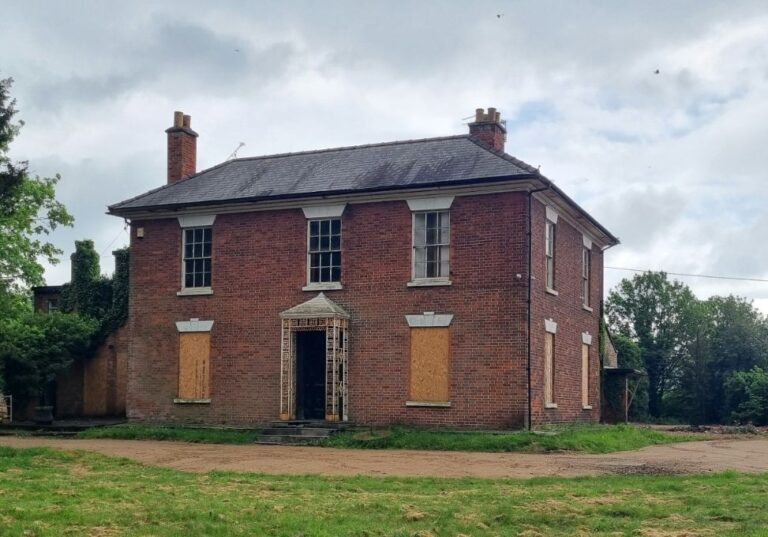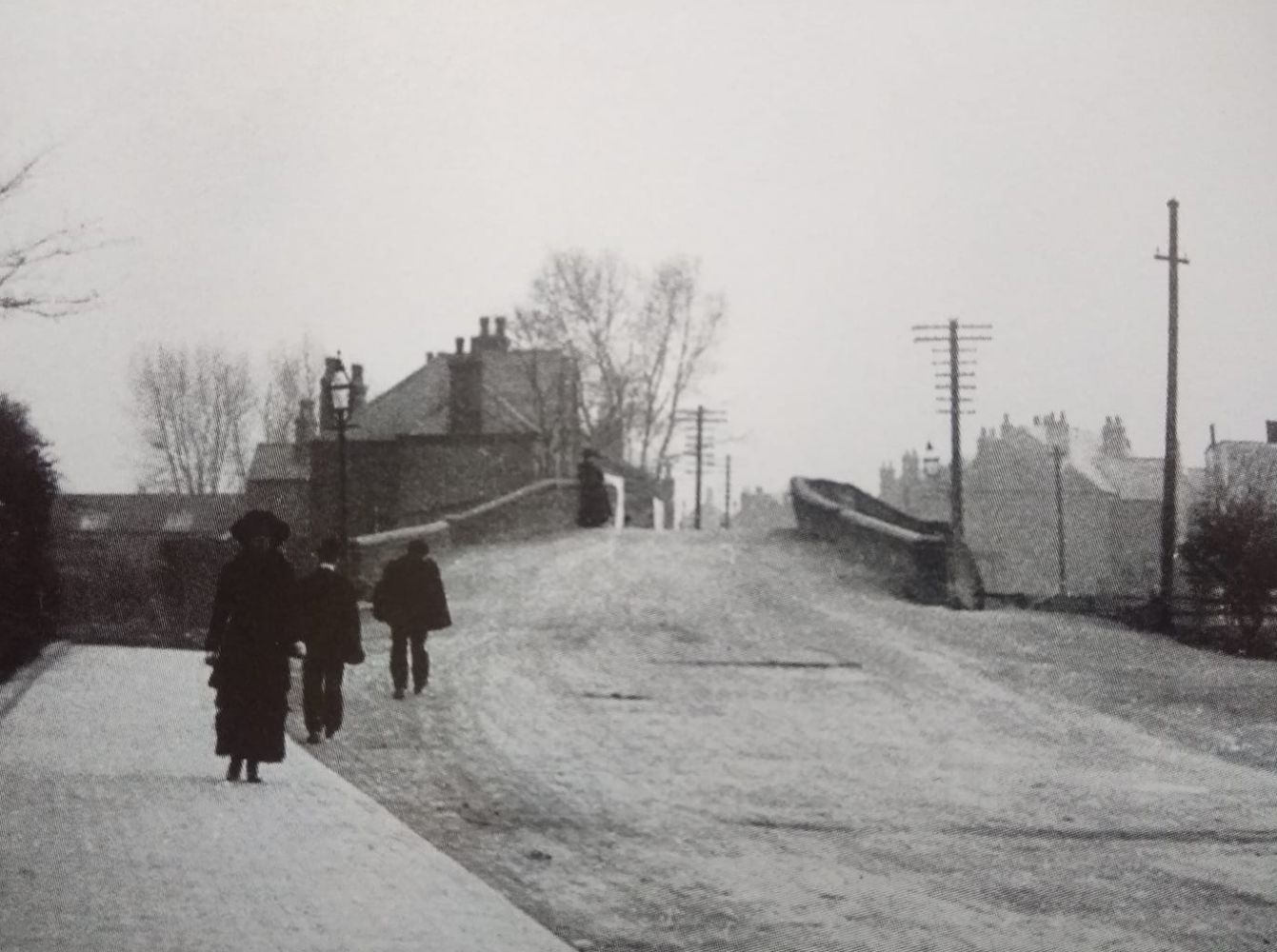
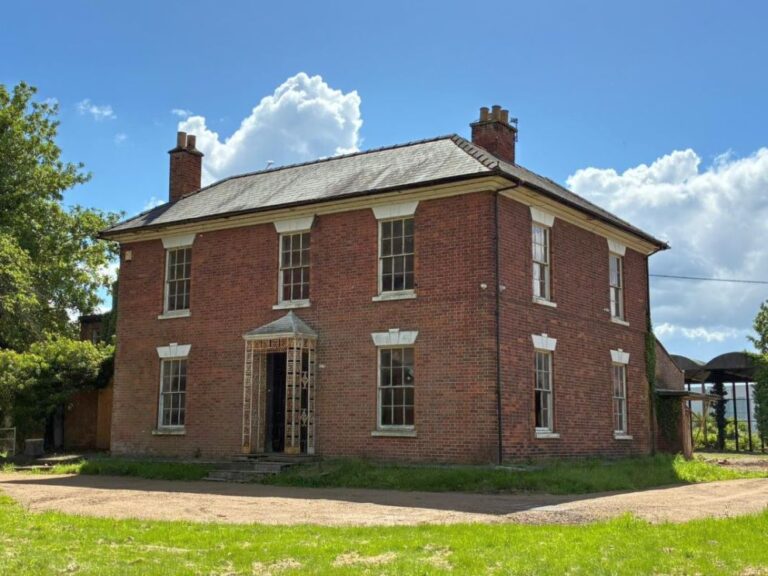
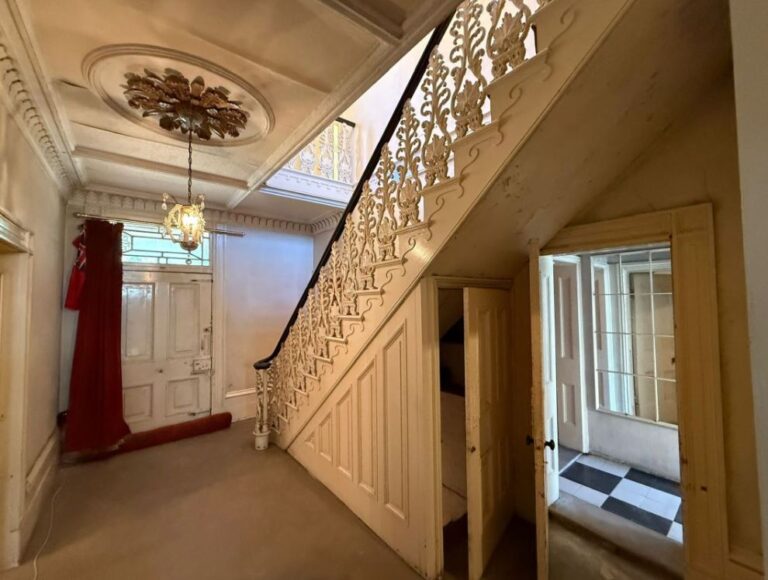
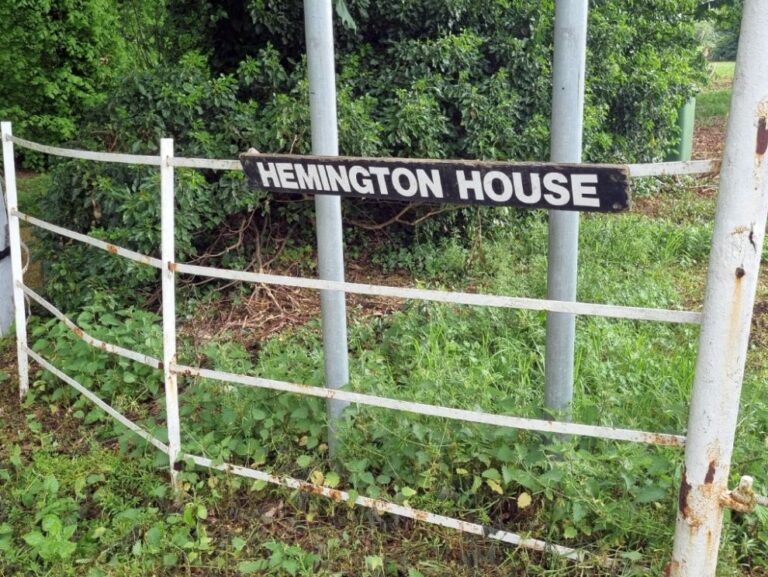
Hemington Fields House (now Hemington House) was built around 1835. It’s near Sawley (on Tamworth Road, about ½ mile past Harrington Bridge) but in Hemington parish. It was built circa 1830-40 and is now Grade II listed.
It may have been built for John and Ann Smith, who married in 1831. Probably on land owned by her father, William Simpkins. Around 1850 the Smiths moved to Sawley and were replaced by Joseph and Mary Chambers , who’d moved from a farm at Wilne. After Joseph died in 1856, Mary continued to run it with her children. They sold up in 1876 and moved to Idridgehay, near Wirksworth.
They were replaced at Hemington Fields by George William Sanford, a young farmer from Warwickshire, but he sold up in 1886 and retired to live in Bondgate, Castle Donington.
The next tenant was Thomas Milnes, who stayed until the early 1900s.
By 1907 a Miss Poyser was at Hemington House, advertising for a maid of about 16 years. She may have been one of the daughters of John Poyser (1845-1920) a farmer in Shardlow. John was the tenant at Shardlow House, and then Home Farm. In 1910 John’s oldest son, William Poyser (born 1878), married Annie Marsh and they took up farming at Hemington House.
They had four daughters. (Annie) Eileen was a nurse at Nottingham General Hospital, before marrying Robert (Bob) Goodwin in June 1939. Nancy Wilhelmina (Bud) sold poultry from the farm before becoming a staff nurse at Harlow Wood Orthopaedic Hospital, near Mansfield. She married Henry Walton-Jones in September 1939. Una Margaret attended Wellington Street Girls School in Long Eaton. She became superintendent physiotherapist at Nottingham General before marrying Dennis F Smith in 1948. He was chief pharmacist at the Royal Manchester Children’s Hospital. The youngest daughter, Renfa Mary married Hilton Law, a Scot, in 1952.
They also had a son, (William) Nevell Poyser. He was named after Albert Thomas Nevell, who had died in 1927 aged only 29. As a teenager, he’d been taken on by William Poyser as a farm pupil (trainee assistant) but was called up to the Army in 1916. After three years in the Royal Artillery, he returned to Hemington Field but had contracted pneumonia, which eventually killed him.
In 1938, Ernest Terah Hooley of Risley Hall bought a legal action against William Poyser, demanding commission he thought he should have received on a land sale. The previous year, Hillhead Gravel had been looking for gravel land in the Shardlow area. Hooley approached Poyser and offered to sell the land for him, in exchange for a 10% commission. But Poyser had already given Hilton Gravel Co. first refusal. Hooley then entered a contract with a local builder who needed gravel for 2,000 new homes in Derby. But Poyser refused to sell, which led to the building firm – Wilson and Whitfield – suing Terah Hooley.
During WW2 there was an Army searchlight battery near the house, between Tamworth Road and Netherfield Lane (which used to lead to the A6, before it was enlarged to become the A50). Air photos show a weapons pit, buildings and roads (see the top right corner of this 1944 photo). In 1946 the remains of the camp were sold off at the farm – sectional wooden huts, sentry boxes, kitchen equipment, concrete slabs and a water storage tank.
William Poyser tried to sell up and retire in 1945, but seems to have kept farming until 1950. He remained at Hemington Fields until his death in 1967, but may have lived in one of the nearby cottages.
In fact, it’s hard to work out exactly who lived where in the post-war period because there were at least 2 nearby cottages. For example, in 1962, when George Kinsey married Heather Fox, they were apparently moving to Hemington Fields House, but a year later when George was killed in a quarrying accident at Breedon, they had been living on Main Street, Long Eaton.
George Henry Mills seems to have run the farm from the early 1950s to the mid-1960s.
The 1970 phone book shows a William Poyser at Hemington Fields Farm (Telephone number Shardlow 202) so perhaps the Poyser’s son had returned, at least for a while.
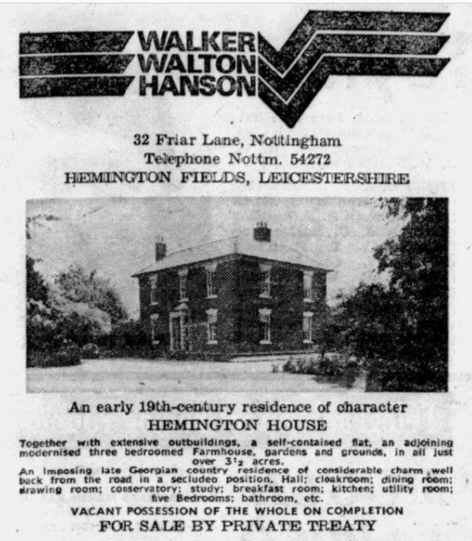
In 1976 the house and surrounding land was up for sale. It was bought by David and Anna Budd. David was from Barton Ferry, Attenborough. He’d started as a sheet metal worker, but became a coachbuilder. He’d married Anna Murfet in 1957. After buying Hemington House he advertised to buy old Rolls Royce cars. For a while in the 1980s they were prominent in the local Conservative Party. The family seem to have kept the house for the next fifty years.
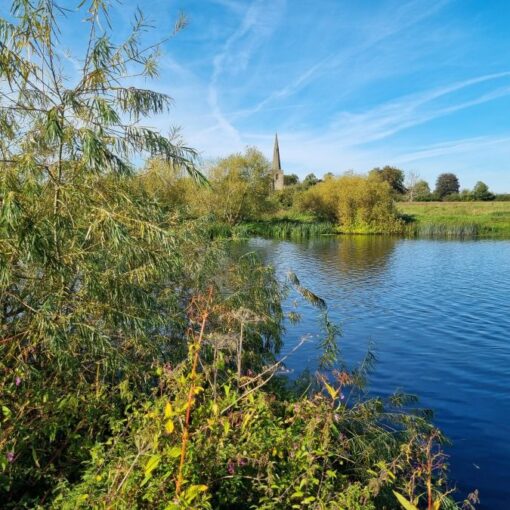
Hemington House was sold at auction in June 2026. The immediate area has changed a lot in the previous 60 years. It is now surrounded by the M1 motorway, a travellers’ site, the Aldi Regional Distribution Centre (now due to close) and (the other side of Tamworth Road) gravel workings, mostly completed and transformed into fishing lakes. But is still an attractive house in (what should be) a nice area. It will be interesting to see how it is developed.